


BD biliar
Estás aquí:
¿Estás interesado
en este producto?
BD biliar
Referencias personales
Dr. Giulio Barbiero
Medical Director, Azienda Ospedaliera di Padova, Italy
'Biodegradable Biliary Stents for Percutaneous Treatment of Post-liver Transplantation Refractory Benign Biliary Anastomotic Strictures. CVIR Cardiovasc Intervent Radiol (2020) 43:749-755 DOI 10.1007/s00270-020-02442-4'are:
1) "Biodegradable Biliary Stents (BBS) could be safely placed, with few side effects, for the treatment of refractory Benign Anastomotic Strictures (BAS) in the Liver Transplant (LT) setting.":
2) "BBS placement in selected adult LT recipients had a success rate of 72% at a median follow-up time of 27 months according to Kaplan–Meier analysis".:
3) "The introduction of BBS may offer a safe and effective option, especially among patients with refractory BAS, who otherwise would be surgically treated".:
4) "BBS placement should be considered as a new tool for the management of BAS in adult LT setting."
1) "Biodegradable Biliary Stents (BBS) could be safely placed, with few side effects, for the treatment of refractory Benign Anastomotic Strictures (BAS) in the Liver Transplant (LT) setting.":
2) "BBS placement in selected adult LT recipients had a success rate of 72% at a median follow-up time of 27 months according to Kaplan–Meier analysis".:
3) "The introduction of BBS may offer a safe and effective option, especially among patients with refractory BAS, who otherwise would be surgically treated".:
4) "BBS placement should be considered as a new tool for the management of BAS in adult LT setting."
Dr. Sung Ho Hyon
Hospital Italiano de Buenos Aires, Argentina
"We used a biodegradable stent for the first time in a 6-y.o. girl with intractable stricture of hepaticojejunostomy, who required a recanalization manoeuvre. After that, we inserted a biodegradable stent and the anastomosis is still patent more than 3.5 years later (Cardiovasc Intervent Radiol. 2019 Mar;42(3):466-470). We placed the biodegradable stent because we had read publications about its good results and in the case of paediatric patients, in particular, the problem is solved with a single admission to the operating room. In the standard balloon dilatation protocol, they must be admitted 3 times, which implies more ionizing radiation, more general anaesthesia procedures, more hospital stays, etc.
My hospital is the largest tissue and organ transplantation centre in the country, performing close to 60 liver transplants per year. A good proportion of liver recipients are in the paediatric population and may present stricture of hepaticojejunostomy in the follow-up period.
Traditionally, our treatment protocol has been percutaneous transhepatic cholangiography followed by three sessions of balloon dilatation. Alternatively, we have used biodegradable stents with excellent results."
My hospital is the largest tissue and organ transplantation centre in the country, performing close to 60 liver transplants per year. A good proportion of liver recipients are in the paediatric population and may present stricture of hepaticojejunostomy in the follow-up period.
Traditionally, our treatment protocol has been percutaneous transhepatic cholangiography followed by three sessions of balloon dilatation. Alternatively, we have used biodegradable stents with excellent results."
Descripción básica
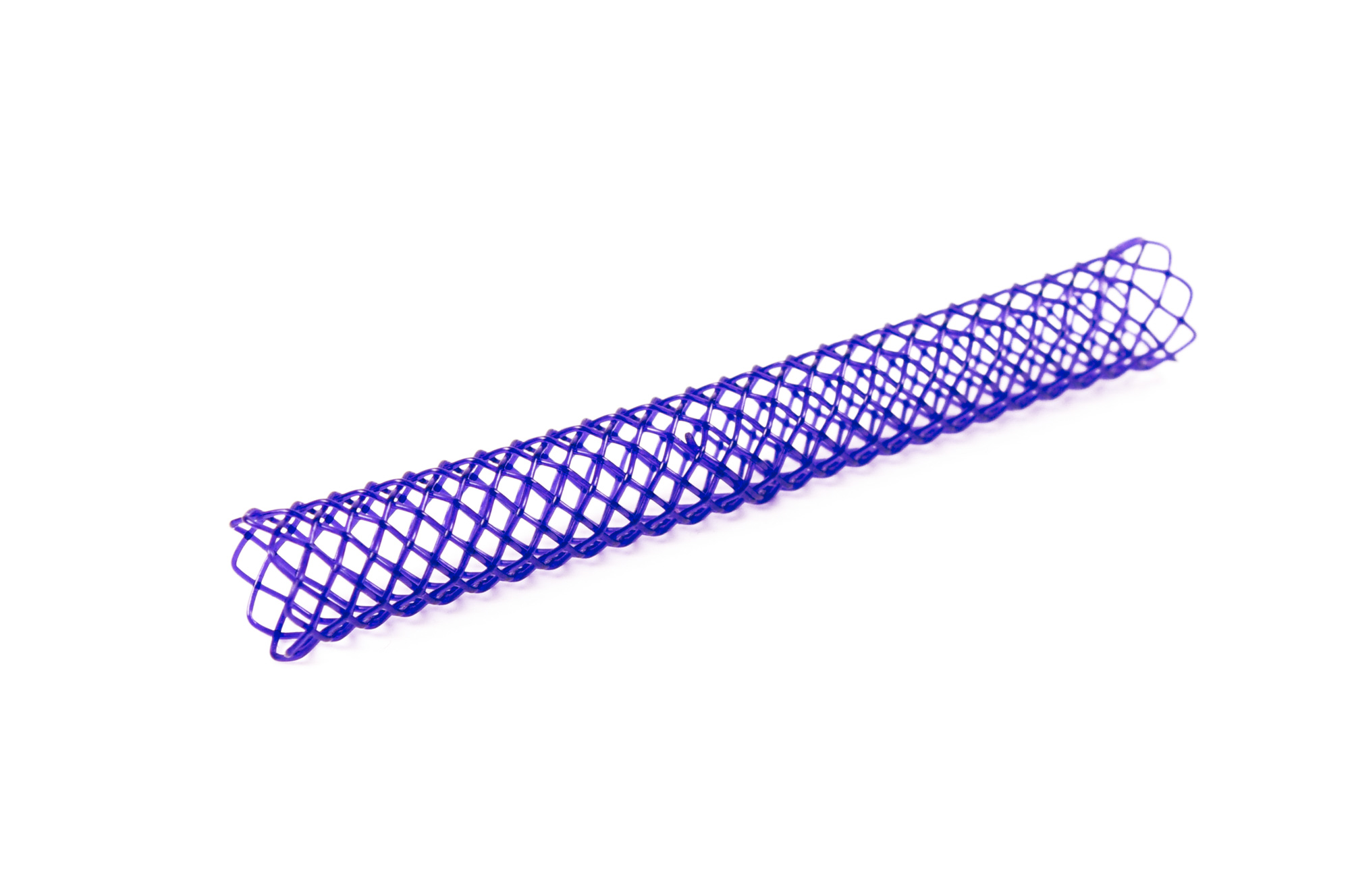
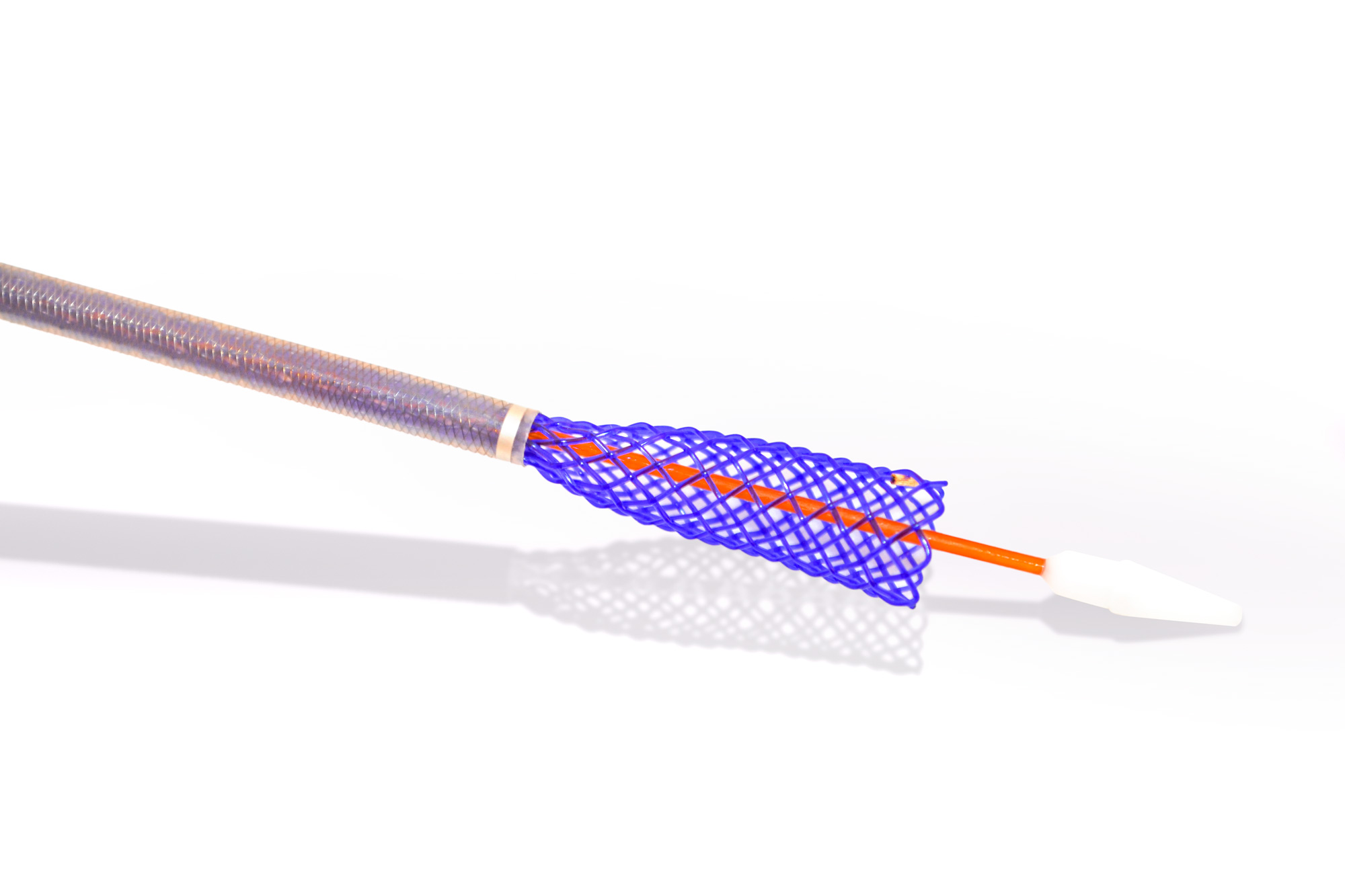
La ELLA-BD Prótesis Biliar THP es una prótesis biodegradable autoexpandible, única en el mundo, diseñada para su uso en las vías biliares. Normalmente se degrada en el cuerpo humano en un plazo de 3 a 6 meses tras su implantación. Esta propiedad la hace adecuada para uso temporal en indicaciones benignas donde no es necesaria su extracción posterior, a diferencia de las fabricadas con materiales no degradables.
Protegido por patente

Indicaciones
La ELLA-BD Prótesis Biliar THP está destinada a pacientes mayores de 18 años y está indicada para el tratamiento de estenosis biliares benignas.
Características / Beneficios
La ELLA-BD Prótesis Biliar THP normalmente se degrada en el cuerpo humano en un plazo de 3 a 6 meses, lo que reduce el número de intervenciones médicas y visitas al hospital. La prótesis está fabricada con polidioxanona, un polímero biodegradable utilizado en medicina durante más de 30 años como material de sutura quirúrgica.
La integridad y la fuerza radial de la prótesis se mantienen durante 6 a 8 semanas tras la implantación. Posteriormente, la fuerza radial disminuye gradualmente hasta que el material se degrada por completo en un plazo de 3 a 6 meses.
El valor del pH afecta el proceso de degradación de la prótesis. En el cuerpo humano, la degradación tiende a ser más lenta en pH neutro, pero se acelera en pH ácido.
El diseño de la prótesis sin cubierta garantiza una baja migración.
La polidioxanona no es visible en las imágenes de rayos X; por lo tanto, se colocan marcadores radiopacos de oro en ambos extremos de la prótesis. La prótesis es compatible con resonancia magnética («RM Condicional») con intensidades de campo magnético estático de 1,5 Tesla y 3 Tesla.
PROCEDIMIENTO DE IMPLANTACIÓN
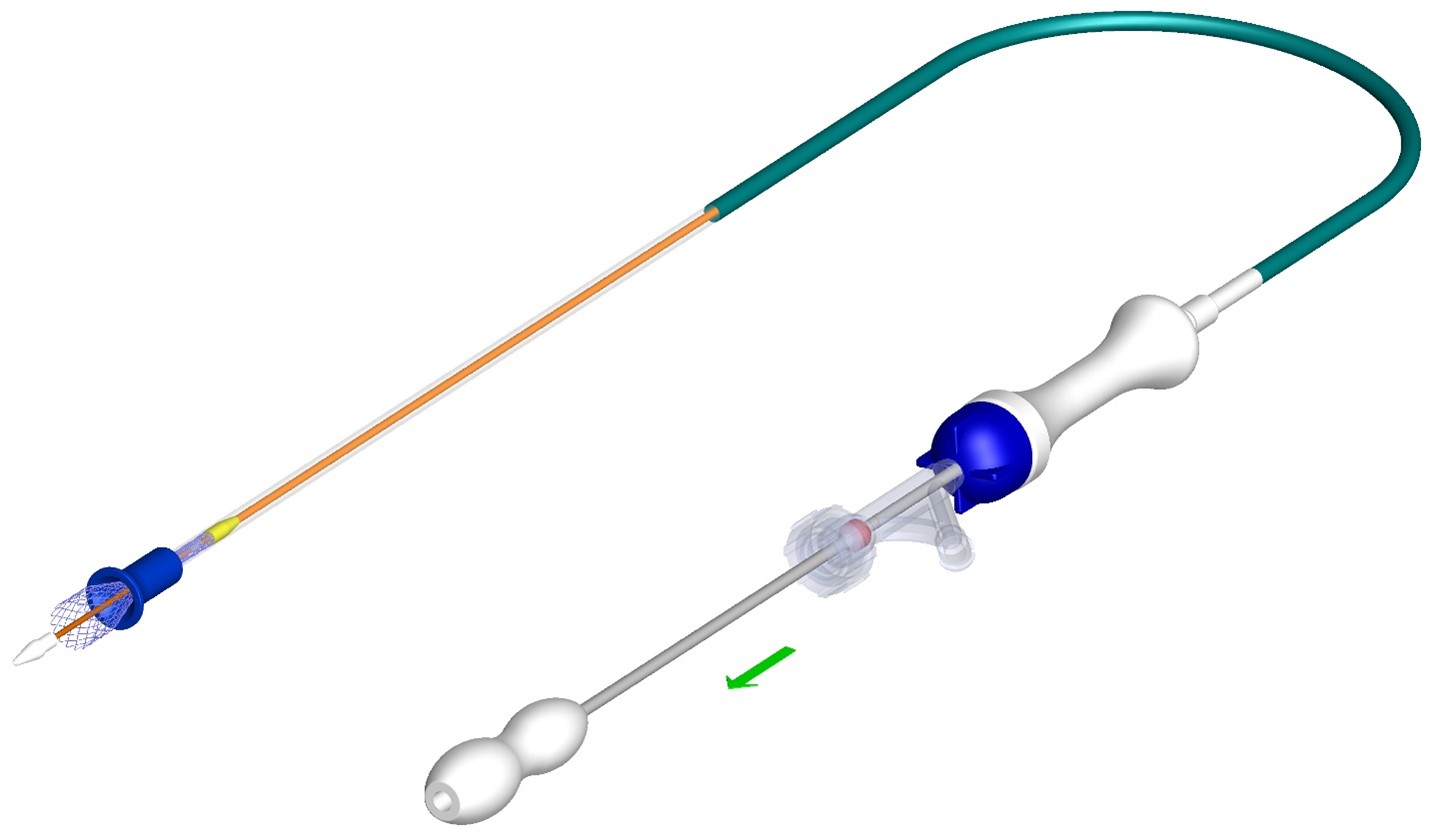
La prótesis se suministra estéril. El paquete incluye un sistema de implantación resistente a las torceduras, una herramienta de compresión y la prótesis envuelta en una cubierta protectora. El sistema de implantación permite recuperar una prótesis parcialmente desplegada durante la implantación, hasta el 60 % de su longitud. Inmediatamente antes de la implantación, la prótesis debe comprimirse manualmente en el sistema de implantación. La prótesis se implanta bajo guía fluoroscópica y para su correcto posicionamiento se recomienda el uso de un alambre guía de 0,035″ (0,89 mm).
Medidas disponibles
| REF | Diámetro nominal del cuerpo de la prótesis [mm] | Longitud nominal de la prótesis [mm] | Sistema de implantación |
|---|---|---|---|
| 019-15-08-030 | 8 | 30 | 11,8 F 60 cm |
| 019-15-08-040 | 40 | ||
| 019-15-08-050 | 50 | ||
| 019-15-08-060 | 60 | ||
| 019-15-08-070 | 70 | ||
| 019-15-08-080 | 80 | ||
| 019-15-10-030 | 10 | 30 | |
| 019-15-10-040 | 40 | ||
| 019-15-10-050 | 50 | ||
| 019-15-10-060 | 60 | ||
| 019-15-10-070 | 70 | ||
| 019-15-10-080 | 80 |
Publicaciones
Spanish group BiELLA (SERVEI). Absorbable stents for treatment of benign biliary strictures: long-term follow-up in the prospective Spanish registry
De Gregorio MA, Criado E, Guirola JA, Alvarez-Arranz E, Pérez-Lafuente M, Barrufet M, Ferrer-Puchol MD, Lopez-Minguez S, Urbano J, Lanciego C, Aguinaga A, Capel A, Ponce-Dorrego MD, Gregorio A
Eur Radiol. 2020 Aug;30(8):4486-4495. doi: 10.1007/s00330-020-06797-7. Epub 2020 Mar 27. PMID: 32221684.
Benign biliary strictures refractory to standard bilioplasty treated using polydoxanone biodegradable biliary stents: retrospective multicentric data analysis on 107 patients
Mauri G, Michelozzi C, Melchiorre F, Poretti D, Pedicini V, Salvetti M, Criado E, Falcò Fages J, De Gregorio MÁ, Laborda A, Sonfienza LM, Cornalba G, Monfardini L, Panek J, Andrasina T, Gimenez M
Eur Radiol. 2016 Nov;26(11):4057-4063. doi: 10.1007/s00330-016-4278-6. Epub 2016 Mar 4. PMID: 26943135
Biodegradable biliary stents: A new approach for the management of hepaticojejunostomy strictures following bile duct injury. Prospective study
Giménez ME, Palermo M, Houghton E, Acquafresca P, Finger C, Verde JM, Cúneo JC.
Arq Bras Cir Dig. 2016 Apr-Jun;29(2):112-6. doi: 10.1590/0102-6720201600020012. PMID: 27438039; PMCID: PMC4944748.
Biodegradable Biliary Stents for Percutaneous Treatment of Post-liver Transplantation Refractory Benign Biliary Anastomotic Strictures
Battistel M, Senzolo M, Ferrarese A, Lupi A, Cillo U, Boccagni P, Zanus G, Stramare R, Quaia E, Burra P, Barbiero G
Cardiovasc Intervent Radiol. 2020 May;43(5):749-755. doi: 10.1007/s00270-020-02442-4. Epub 2020 Mar 4. PMID: 32133551.
Biodegradable versus multiple plastic stent implantation in benign biliary strictures: A systematic review and meta-analysis
G Almeida G, Donato P
Eur J Radiol. 2020 Apr;125:108899. doi: 10.1016/j.ejrad.2020.108899. Epub 2020 Feb 13. PMID: 32113154.
Biodegradable biliary stent implantation in the treatment of benign bilioplastic-refractory biliary strictures: preliminary experience
Mauri G, Michelozzi C, Melchiorre F, Poretti D, Tramarin M, Pedicini V, Solbiati L, Cornalba G, Sconfienza LM
Eur Radiol. 2013 Dec;23(12):3304-10. doi: 10.1007/s00330-013-2947-2. Epub 2013 Jul 11. PMID: 23842947.
Management of benign intrahepatic bile duct strictures: initial experience with polydioxanone biodegradable stents
Petrtýl J, Brůha R, Horák L, Zádorová Z, Dosedel J, Laasch HU
Endoscopy. 2010;42 Suppl 2:E89-90. doi: 10.1055/s-0029-1243880. Epub 2010 Mar 1. PMID: 20195981.
Beneficial Effect of a Resorbable Biliary Stent in Living Donor Liver Transplantation
Sánchez-Cabús S, Calatayud D, Ferrer J, Molina V, Pavel MC, Sampson J, Saavedra D, Fondevila C, Fuster J, García-Valdecasas JC
Eur Surg Res. 2016;56(3-4):123-31. doi: 10.1159/000443271. Epub 2016 Feb 4. PMID: 26840276.
The novel use of a biodegradable stent placed by percutaneous transhepatic cholangiography for the treatment of a hepaticojejunostomy biliary leak following an extended left hepatectomy and pancreaticoduodenectomy
Jones L, Moir J, Brown C, Williams R, French JJ.
Ann R Coll Surg Engl. 2014 Sep;96(6):e1-3. doi: 10.1308/003588414X13946184901326. PMID: 25198957; PMCID: PMC4474217
Percutaneous Patency Recovery and Biodegradable Stent Placement in a Totally Occluded Hepaticojejunostomy After Paediatric Living Donor Liver Transplantation
Huespe PE, Oggero S, de Santibañes M, Boldrini G, D Agostino D, Pekolj J, de Santibañes E, Ciardullo M, Hyon SH
Cardiovasc Intervent Radiol. 2019 Mar;42(3):466-470. doi: 10.1007/s00270-018-2115-9. Epub 2018 Nov 12. PMID: 30420998.
Para obtener más información sobre publicaciones, visite nuestra sección de Educación.