


DV Stent tracheal
You are here:
- Home
- PNEUMOLOGY
- DV Stent tracheal
Are you interested
in this
product?
DV Stent tracheal
Basic description
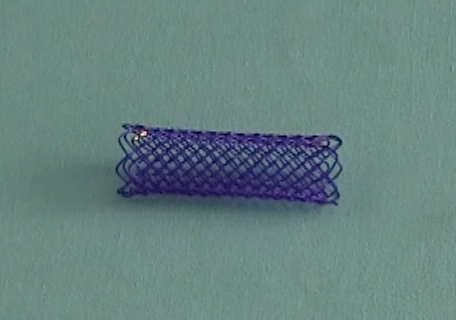
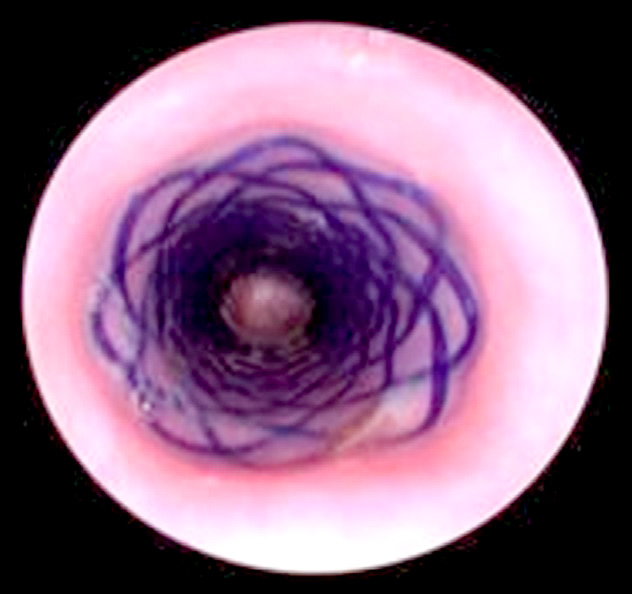
DV Stent Tracheal is a worldwide unique self-expanding biodegradable stent intended for use in the trachea. It typically degrades in the human body within 2 – 4 months after implantation. This property makes it suitable for temporary use in benign indications where subsequent removal is not necessary, unlike stents made of non-degradable materials.
The product is currently available as a custom-made device.
Patent protected
CE mark pending
INDICATIONS
DV Stent Tracheal is intended for patients over 18 years and is indicated for the treatment of benign tracheal strictures or tracheomalacia.
Features / Benefits
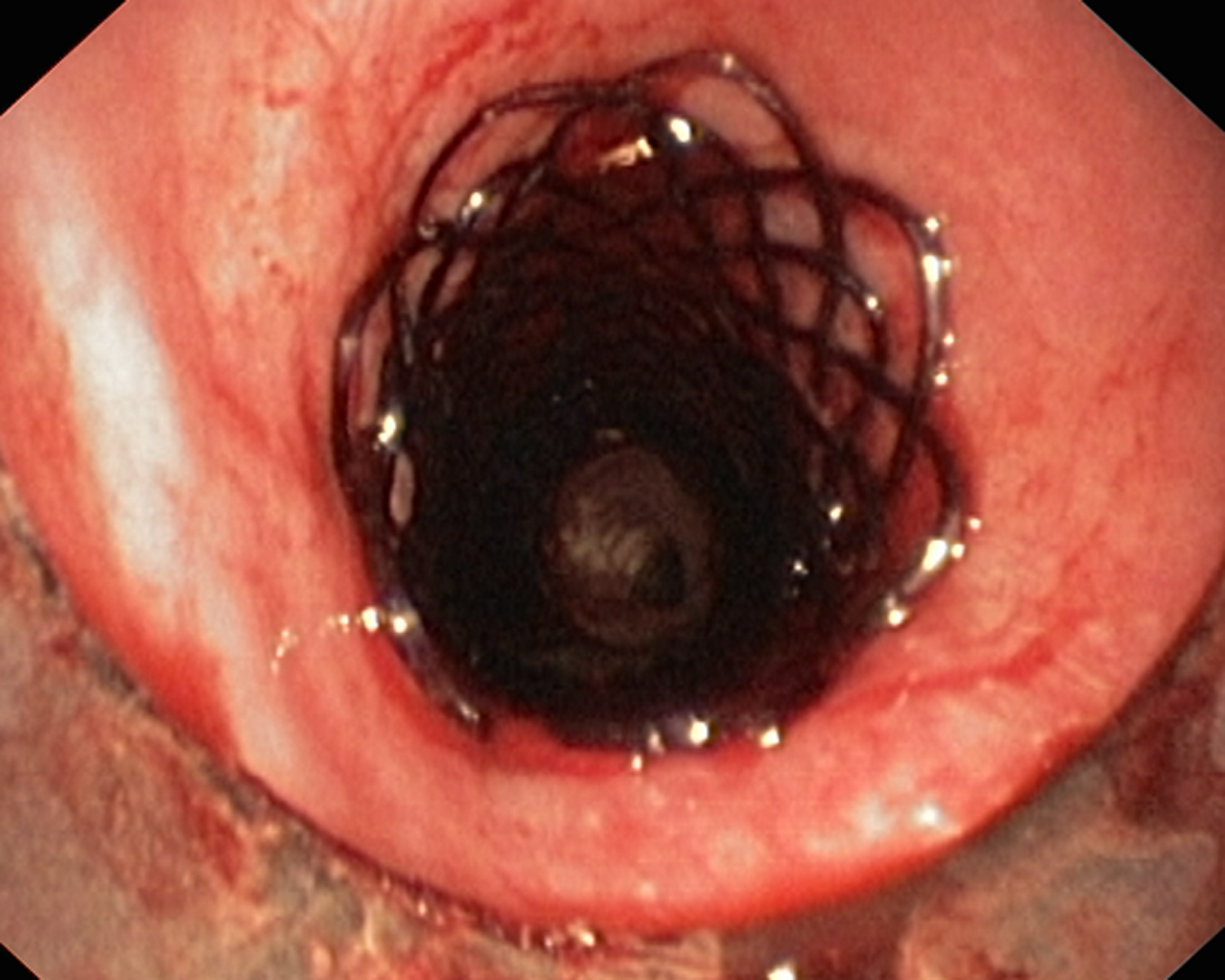
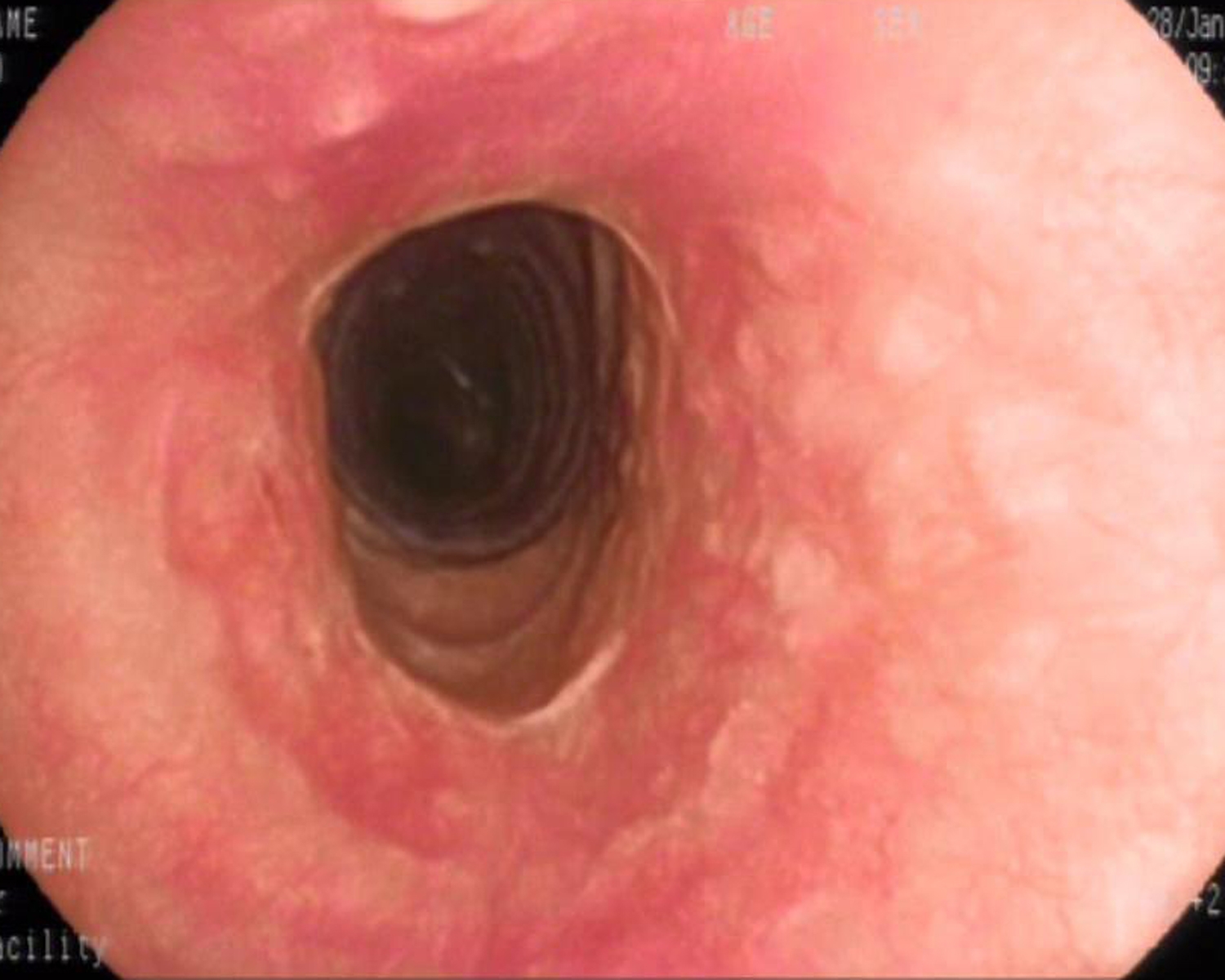
DV Stent Tracheal typically degrades in the human body within 2–4 months, which reduces the number of medical interventions and hospital visits. The stent is made of polydioxanone, a biodegradable polymer used in medicine for more than 30 years in the form of surgical suture material.
The integrity and radial force of the stent are maintained for 6–8 weeks after implantation; thereafter, the radial force gradually decreases until the material fully degrades within 2–4 months.
The pH value affects the stent degradation process. In the human body, degradation tends to be slower under neutral pH but accelerates in acidic pH.
Low migration is ensured by the uncovered stent design.
Polydioxanone is not visible under X-ray imaging; therefore, gold radiopaque markers are placed at both ends of the stent.
The stent is MRI-compatible (“MR Conditional”) at static magnetic field strengths of 1.5 Tesla and 3 Tesla.
IMPLANTATION PROCEDURE
The stent is supplied sterile. The package includes a delivery system, compressing tool, and the stent packed in a protective foil. Immediately before implantation, the stent must be manually compressed into the delivery system. The stent is implanted under bronchoscopic guidance through a rigid bronchoscope.
Available sizes
| REF No. | Nominal stent body diameter [mm] | Nominal stent length [mm] | Delivery system |
|---|---|---|---|
| 019-IU-16-040-DV | 16 | 40 | 26 F / 18 F 60 cm |
| 019-IU-16-050-DV | 50 | ||
| 019-IU-16-060-DV | 60 | ||
| 019-IU-16-070-DV | 70 | ||
| 019-IU-18-040-DV | 18 | 40 | |
| 019-IU-18-050-DV | 50 | ||
| 019-IU-18-060-DV | 60 | ||
| 019-IU-18-070-DV | 70 | ||
| 019-IU-20-040-DV | 20 | 40 | |
| 019-IU-20-050-DV | 50 | ||
| 019-IU-20-060-DV | 60 | ||
| 019-IU-20-070-DV | 70 |
Publications
Biodegradable tracheal stents: our ten-year experience with adult patients
Ludek Stehlik, Debarya Guha, Sheetal Anandakumar, Alice Taskova and Martina Koziar Vasakova
BMC Pulm Med 24, 238 (2024).doi.org/10.1186/s12890-024-03057-y. PMID: 38750487 PMCID: PMC11094873
Single-center review on safety of biodegradable airway stenting in pediatric population
Federico Minen, Andrew Durward, Paul James, Athanasios Diamantopoulos, Haran Jogeesvaran, Gareth J Morgan, Andrew Nyman
Pediatr Pulmonol. 2023;1‐10., DOI: 10.1002/ppul.26670, PMID: 37728230
Further experience with polydioxanone airway stents in children
Rocío Morante-Valverde, María López Díaz, Mª Carmen Luna-Paredes, Sara Proaño, Cecilia Castellano, Mª Dolores Méndez, Victoria Ramos, Juan L Antón-Pacheco
Pediatr Pulmonol. 2024 Oct;59(10):2517-2522. doi: 10.1002/ppul.27056. Epub 2024 May 9. PMID: 38721899
First experience with biodegradable airway stents in children
Vondrys D, Elliott MJ, McLaren CA, Noctor C, Roebuck DJ
Ann Thorac Surg. 2011 Nov;92(5):1870-4. doi: 10.1016/j.athoracsur.2011.07.042. Epub 2011 Oct 31. PMID: 22051281
The role of bioresorbable intraluminal airway stents in pediatric tracheobronchial obstruction: A systematic review
Stramiello JA, Mohammadzadeh A, Ryan J, Brigger MT
Int J Pediatr Otorhinolaryngol. 2020 Dec;139:110405. doi: 10.1016/j.ijporl.2020.110405. Epub 2020 Sep 30. PMID: 33017664
For more information on publications, visit our Education section.